
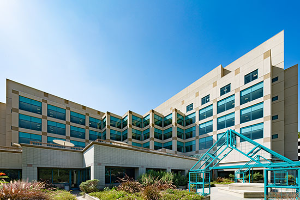
Edmund D. Edelman Children's Court
If your child or family is involved in a proceeding at the Edmund D. Edelman Children's Court in Monterey Park, navigating the Los Angeles County juvenile court system can feel overwhelming.
Whether you are facing a Department of Children and Family Services (DCFS) dependency investigation or a juvenile delinquency allegation, understanding the court's statutory framework, local procedures, and constitutional protections is essential to safeguarding your family unit and your child's future.
Eisner Gorin LLP provides skilled legal representation for parents, guardians, and minors facing delinquency proceedings at the Edmund D. Edelman Children's Court and throughout Los Angeles County.
Edmund D. Edelman Children's Court Location & Basic Information
The Edmund D. Edelman Children's Court serves as the primary, specialized judicial facility handling juvenile dependency and child welfare matters for Los Angeles County.
-
Court Name: Edmund D. Edelman Children's Court – Los Angeles County Superior Court
-
Address: 201 Center Plaza Drive, Monterey Park, CA 91754
-
Phone Number: (323) 307-8000
-
County: Los Angeles County
-
Primary Jurisdiction: Juvenile dependency proceedings, child abuse/neglect allegations, foster care placements, guardianship matters, and select juvenile status offense cases.
Cases Heard at Edmund D. Edelman Children's Court
The Edelman Children's Court primarily resolves proceedings initiated under the California Welfare and Institutions Code (WIC) to address child safety, family stability, and juvenile behavior:
-
Juvenile Dependency Proceedings (WIC 300): Actions initiated by DCFS involving allegations of physical abuse, emotional abuse, sexual abuse, severe neglect, or parental substance abuse.
-
Child Welfare & Custody Determinations: Court orders governing temporary foster placement, legal guardianship, relative placement, visitation rights, and family reunification plans.
-
Status Offenses & Minor Infractions: Cases involving truancy, running away, or incorrigibility that fall under juvenile court supervision.
-
Juvenile Delinquency Matters (WIC 602): Proceedings where a minor is accused of committing acts that would constitute a crime if committed by an adult.
-
Fitness & Transfer Hearings (WIC 707): Formal proceedings evaluating whether a juvenile accused of severe violent offenses should be transferred to adult criminal court.
The Juvenile Dependency Court Process in California
Juvenile dependency cases follow a strict timeline governed by the California Welfare and Institutions Code:
-
Detention Hearing: Held shortly after a child is removed from the home or a petition is filed. The court determines whether temporary detention outside the home is necessary to protect the minor pending further hearings.
-
Jurisdiction Hearing: The court evaluates evidence to determine whether the factual allegations in the DCFS petition are true and whether the child falls under Welfare and Institutions Code Section 300.
-
Disposition Hearing: If the court asserts jurisdiction, it determines appropriate court-ordered placement (home with services, relative placement, or foster care) and mandates case plans, such as parenting classes, counseling, or drug testing.
-
Review Hearings (6-Month, 12-Month, 18-Month): Periodic status reviews to evaluate parental compliance with reunification plans and determine if the child can safely return home.
-
Permanency Planning Hearing (WIC 366.26): If family reunification efforts fail, the court establishes a permanent plan for the child, which may include adoption, legal guardianship, or long-term foster care.
Key California Juvenile Statutes
-
Welfare and Institutions Code Section 300 (WIC 300): Establishes juvenile dependency jurisdiction for children who have suffered, or face substantial risk of suffering, abuse, neglect, or abandonment.
-
Welfare and Institutions Code Section 602 (WIC 602): Defines juvenile delinquency jurisdiction over minors who violate state or federal criminal laws.
-
Welfare and Institutions Code Section 707 (WIC 707): Governs fitness hearings to evaluate transferring a minor accused of serious felonies to adult criminal court.
-
California Penal Code Section 272 (PC 272): Criminalizes acts or omissions that cause or encourage a minor to become a dependent or delinquent child.
Potential Long-Term Consequences of Dependency & Delinquency Proceedings
|
Impact Area |
Specific Risks |
Long-Term Consequences |
| Parental Rights | Court-ordered removal of children, restricted visitation | Potential permanent termination of parental rights under WIC 366.26 |
| Family Stability | Out-of-home placement, long-term foster care | Prolonged family separation, psychological stress, disruption of daily routines |
| Educational Impact | School transfers, missed attendance during court steps | Academic delays, lowered graduation rates, disruption in special education programs |
| Future Record & Background | Formal DCFS findings, Child Abuse Central Index (CACI) listing | Employment barriers in healthcare, childcare, education, and professional licensing |
Frequently Asked Questions (FAQs)
What types of cases are primarily handled at the Edmund D. Edelman Children's Court?
The Edmund D. Edelman Children's Court primarily handles juvenile dependency matters under WIC 300, including DCFS investigations, child abuse or neglect petitions, foster care placements, guardianship, and family reunification proceedings in Los Angeles County.
What happens at a juvenile dependency detention hearing in Monterey Park?
At the initial detention hearing, a judge decides whether there is a prima facie showing that the child must remain in protective custody or if they can safely return home with supportive DCFS services while the case is pending.
Can parents be represented by an attorney during DCFS proceedings?
Yes. Parents have a constitutional right to legal counsel in dependency proceedings to challenge DCFS allegations, advocate for child return, cross-examine social workers, and ensure fair treatment during court hearings.
What is the Child Abuse Central Index (CACI) and how does it relate to Edelman Children's Court cases?
CACI is a state database maintained by the California Department of Justice. Substantiated allegations from DCFS investigations or dependency proceedings can result in a party being listed on CACI, which can permanently impair employment opportunities in education, healthcare, and child care.
Can juvenile court records or DCFS cases affect a parent's criminal record?
While dependency proceedings are civil in nature and confidential, evidence gathered during a DCFS investigation can be shared with law enforcement and used to file concurrent criminal charges under California Penal Code Section 273a (child endangerment) or Penal Code Section 272.
Contact Eisner Gorin LLP today at (818) 781-1570 or submit an online inquiry to schedule a confidential case consultation with an experienced California juvenile defense attorney.
 If you have one phone call from jail, call us! If you are facing criminal charges,