
Title 18 U.S. Code § 2383 defines rebellion or insurrection as a federal crime for anyone who incites, initiates, assists, participates in, or provides aid and comfort to a rebellion against the authority or laws of the United States. The term' aid and comfort' is broadly interpreted and can include any form of support, whether it's financial, logistical, or moral, that contributes to the success or continuation of the rebellion or insurrection.
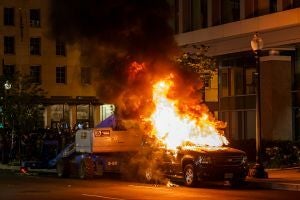
A conviction under this law carries severe penalties, including a substantial fine, up to 10 years' imprisonment, or both. Furthermore, it disqualifies the individual from holding any office under the United States. The law explicitly prohibits inciting, initiating, assisting, participating in, or providing support to a rebellion or insurrection.
Under the elements of the crime defined in Section 2383, a person can be convicted of encouraging or inciting rebellion or insurrection, taking initial steps to start a rebellion, aiding or supporting participants, directly engaging in rebellion, or providing assistance to those involved in rebellion or insurrection.
This could include actions such as making public statements that encourage violence against the government, organizing or leading a violent protest, or providing financial or logistical support to a group planning a violent uprising.
Key Takeaways
- Any act of rebellion or insurrection against the U.S. government is a serious federal crime, punishable by significant jail time and fines.
- In essence, the law prohibits inciting, aiding, or taking part in a rebellion or insurrection against U.S. laws and authority.
- While peaceful protests are protected by the Constitution and legal, acts of violence and destruction are not.
- Rebellion and insurrection involve destroying government property or assaulting federal officers, which are crimes against the United States and its Constitution.
- It's crucial to note that the Department of Justice (DOJ) rarely files charges for insurrection and rebellion due to the protection granted by the First Amendment.
- An example of rebellion or insurrection includes the incident at the U.S. Capitol on January 6, 2021, when a crowd stormed a government building to allegedly interfere with Congress's official certification of the presidential election results.
- Other possible charges related to the Capitol storming include trespassing on federal property, disorderly conduct, interfering with law enforcement, unlawful entry into restricted areas, and theft of public funds, property, or records.
What Is the Content of Section 2383?
18 U.S. Code § 2383 - Rebellion or insurrection says "Whoever incites, sets on foot, assists, or engages in any rebellion or insurrection against the authority of the United States or the laws thereof, or gives aid or comfort thereto, shall be fined under this title or imprisoned not more than ten years, or both; and shall be incapable of holding any office under the United States."

Insurrection involves acts of violence, but it's not the only possible charge. For instance, seditious conspiracy aims to overthrow the US government. Individuals can face charges of seditious conspiracy and conspiracy even if they do not execute the planned violence.
As noted, actual acts of rebellion and insurrection are uncommon, but this law has drawn renewed attention since the January 6 riots at the U.S. Capitol.
Speculation emerged about whether any protestors, including President Trump, might be charged with rebellion and insurrection. Although many have been convicted of other crimes related to the events, no one has been charged under 18 U.S.C. 2382.
Rebellion and Insurrection Explained
Although federal law does not explicitly define 'insurrection,' courts and legal experts typically view it as a violent rebellion or coordinated resistance against the government or its laws.

Similarly, 'rebellion' lacks a precise legal definition but generally refers to an organized, armed, and often violent opposition to the government or its laws. Understanding these legal definitions can help you navigate the complexities of this law.
Like "insurrection," the word "rebellion" lacks a precise legal definition. Nonetheless, in legal settings, rebellion generally refers to an organized, armed, and often violent opposition to the government or its laws.
Rebellion usually involves a larger and more organized effort than insurrection, aimed at overthrowing or undermining the existing government. To demonstrate a violation of U.S.C. 2383, the prosecution must prove these elements:
- The defendant intentionally encouraged, participated in, or provided support to a rebellion or insurrection.
- The rebellion or insurrection was directed against the authority of the United States or its laws.
- The defendant deliberately and intentionally engaged in these actions.
What Are the Federal Laws Related to This?
Chapter 115 of 18 U.S. Code, titled 'Treason, Sedition, and Subversive Activities,' encompasses several federal statutes related to 18 U.S.C. 2383 concerning rebellion or insurrection, including the following:
- 18 U.S.C. 2381 - Treason
- 18 U.S.C. 2382 - Misprision of treason
- 18 U.S.C. 2384 - Seditious conspiracies
- 18 U.S.C. 2385 - Advocating the overthrow of Government
- 18 U.S.C. 2386 - Registration of certain organizations
- 18 U.S.C. 2387- Activities affecting armed forces generally
- 18 U.S.C. 2388 - Activities affecting armed forces during war
- 18 U.S.C. 2389 - Recruiting for service against the United States
- 18 U.S.C. 2390 - Enlistment to serve against the United States.
What Are the Penalties Under 18 U.S.C. 2383?
A conviction under 18 U.S.C. 2383 has serious consequences. If convicted of insurrection or rebellion against the U.S. government, you may face the following penalties:
- Imprisonment for as long as 10 years
- A fine of up to 50,000 as determined by the court.
- Permanently bars you from holding any government office in the United States.
What Are the Top Defenses?
If you face charges under 18 U.S.C. 2383, consulting an experienced federal criminal defense attorney can assist in identifying defenses and formulating an effective legal strategy. One possible argument is that there was no intent.

The prosecution needs to demonstrate that your actions were deliberate and purposeful. Proving that you lacked the specific intent to incite or participate in rebellion or insurrection might serve as a strong defense.
Maybe we can challenge the First Amendment protection. In certain situations, your actions might be covered by the First Amendment's free speech guarantee. Nonetheless, it does not shield speech that incites immediate unlawful activity.
It could also be argued that there was no insurrection or rebellion. Your lawyer might contend that even if your actions breached other federal laws, they did not constitute rebellion or insurrection according to common definitions.
For more information, contact our federal criminal defense law firm, Eisner Gorin LLP, in Los Angeles, CA.
Related Content:

 If you have one phone call from jail, call us! If you are facing criminal charges,